Showing posts with label Book Reviews. Show all posts

Tuesday, July 9, 2013

Book Review: A Million Suns

Godspeed was once fueled by lies. Now it is ruled by chaos. 

It’s been three months since Amy was unplugged. The life she always knew is over. Everywhere she looks, she sees the walls of the spaceship Godspeed.

But there may be hope: Elder has assumed leadership of the ship. He's finally free to act on his vision—no more Phydus, no more lies.

But when Elder learns shocking news about the ship, he and Amy race to discover the truth behind life on Godspeed. They must work together to unlock a mystery that was set in motion hundreds of years earlier. Their success—or failure—will determine the fate of the 2,298 passengers aboard Godspeed. But with each step, the journey becomes more perilous, the ship more chaotic, and the love between them more impossible to fight.


Why I read it: I read Across the Universe last summer and really enjoyed it, so I had to read this sequel.

What I liked: Like Across the Universe, this was a story with a great plot, full of twists. I enjoyed how Beth Revis managed to reveal even more secrets inside this story. Throughout the whole book she hinted at one big secret and I was so worried that it would be a letdown, but then when I finally read it I was definitely shocked. So, kudos to Revis for the excellent plot.

I also loved the characterization. Amy was a wonderful female protagonist, and I loved how she wasn’t dependent on Elder, but she didn’t just shove him aside out of a desire to be falsely independent. I thought her romance with Elder was really realistic. And as for Elder… he was fantastic in this book. I loved all the curveballs Revis threw in his way, and the way Elder handled them was perfect. He made some good choices and some bad ones, and he had to work through a lot of what it meant to be a leader. Basically, I loved Elder’s character in this book.

What I disliked: There wasn’t anything big I disliked about this book, but there were some small things. First off, the ‘bad guy’ at the end was a little predictable, simply because there were so few characters in the story that it had to be a specific person. Also, while I did enjoy the plot, it never got to that frantic page-turning stage like in The Hunger Games (still, I read the book in about a day, so it was definitely interesting enough). In short, maybe the book could have been a bit better, but that’s just being nitpicky.

From a Christian perspective: In terms of questionable content, this story was a lot cleaner than Across the Universe. There’s basically no sexual content, other than frequent references to an attempted rape. The replacement swearword “frex” was used frequently. As for religion and the beliefs of the characters, Revis steers far clear of that; as far as I remember, no character mentions anything that could be called religious.


To buy or not to buy: All in all, I think I enjoyed this book more than Across the Universe, which has made me excited enough about the trilogy to want to add it to my collection. For fans of dystopia, sci-fi, or mystery, this trilogy is a must-read. 


Wednesday, May 23, 2012

What My Star Ratings Really Mean


I’ve recently been thinking a lot about giving books star ratings and how this works on Goodreads. I know a lot of reviewers really dislike the star system and so choose to just not rate books at all. While I do think that rating books can be a little problematic, I personally like doing it because it gives people a really quick overview of what I thought of the book. For instance, I categorize my book reviews by star rating so that people can quickly see what I like and what I’m not such a fan of.

But ratings can mean different things to different people. On Goodreads, giving something three stars means that you liked it. For me, three stars normally means it was so-so, while books that I like get four stars. So, just so that you people know, I’m going to clarify what each of my ratings means.

1 Star- Disliked; Stay Far Away!
These are books I extremely disliked. Normally I only rate a book one star when I disliked it so much that I actually stopped reading (this has only happened to one book so far.) Normally this means both that the book is boring me and that it has a lot of content that I’m not comfortable with.

2 Stars: Not Worth the Time
These are books that I just really didn’t care for. For instance, Twilight would go in this category. They’re poorly writen, somewhat boring, and just really didn’t resonate with me at all. I will definitely not be buying these books, re-reading them, reading the sequels, or recommending these to anyone.

3 Stars: Not Bad, Give it a Try
These are books that I’m on the fence about. They had some good elements but also a lot of flaws. I probably wouldn’t read any sequels, or more from the same author, but I might recommend them to a friend who likes the genre. Still, I definitely wouldn’t buy these or re-read them.

4 Stars: Pretty Good, I Enjoyed It
A lot of books tend to fall into this category. These are mainly books that I was excited about reading and had heard a lot of good things about, but then just fell a bit short for me. Maybe some of the characters felt flat, or the writing was just okay, or it dragged, or there was a lot of questionable content. Whatever the reason was, these books were good but not absolutely phenomenal. I’ll read the sequels, try to win the books or get them as presents, and recommend them to book-loving friends, but I won’t re-read them over and over.

5 Stars: Highly Recommended
I loved these books! These books are nearly perfect; they might have some minor flaws, but overall everything is great. I’ll definitely be re-reading these books, talking about them to all my friends, and any sequel will automatically be shoved to the top of my TBR pile.

I hope that clarifies any questions you might have about my ratings. Now, over to you. If you run a book blog, or rate stories on Goodreads and Amazon, what criteria do you use for each star? 


Wednesday, May 16, 2012

A Star-Rating Ramble


(WARNING: This post contains a dangerously high amount of opinions and ramblings. Read at your own risk!)

I hate star-rating a book on Goodreads. First of all, I find the star rating to be a really shallow way of judging the book. Am I rating it according to how much I enjoyed it? Or should I rate it according to how good I thought it was? And what does ‘good’ mean? There’s so much that a star rating can’t tell you.

But now, my main problem with the star rating system on Goodreads is how it gives each star rating a description. For instance, three stars is ‘liked it’ while one star is ‘disliked it’ and five stars is ‘it was amazing.’ While this clears up exactly what each star rating really means, it does present me with a bit of a problem.

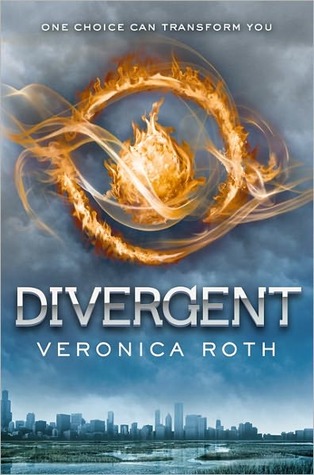
I haven’t found an amazing book in awhile. I know that sounds terrible (and let me get this straight, this says a LOT more about me than about the books I’ve been reading) but it’s true. The last book I read and thought ‘this is amazing’ was Divergent, and that was a year ago. Since then I’ve read a lot of ‘meh’ books and some fairly good books, but all of them fell short in some way.

Take SHATTER ME, for instance. (Since I’m reviewing this book for Divine Debutantes magazine I won’t be posting a review here, but you can read a shortened version on Goodreads.) I’d heard so many amazing things about this book, and the premise sounds fantastic. Seriously, a girl with a touch that can kill in a dystopian world? What could be better?

Think again. SHATTER ME was nothing like I expected. Instead of a strong heroine, I found Juliet to be almost a little wimpy. Instead of a fast-paced book, I found that very little happens. Instead of a dystopian, I got a romance. Yes, it was still a great story, but I disliked it because I had thought it was going to be the sort of story I would love, and then it turned out to be something else entirely.

Now, how in the world can I rate it? My feelings about this book are sort of meh, but on Goodreads that would be equivalent to just two stars, and I definitely feel like SHATTER ME deserves more than that. I’ve ended up giving it four stars (thanks to the fantastic premise) which on Goodreads means that I really liked it. Which, as you’ll know if you read the review, I really didn’t.

Alright. This post has been a lot of ramble, but my main points are these:
1- I don’t really like giving books a star rating
2- I don’t like the ‘tags’ with the Goodreads star ratings
3- I’m having trouble finding books that I really like
4- I think my trouble is because of unrealistically high expectations

This post was really supposed to be about numbers three and four, but it seems like I got sidetracked. I guess I’ll need to write another post sometime soon…

Over to you… does any of this feel familiar? What do you guys think about giving books star ratings? Do you like the Goodreads ‘tags’ for ratings? Why or why not? I’d love to hear other opinions on ratings. 


Saturday, May 12, 2012

Book Review: Across the Universe

by Beth Revis

Seventeen-year-old Amy joins her parents as frozen cargo aboard the vast spaceship Godspeed and expects to awaken on a new planet, three hundred years in the future. Never could she have known that her frozen slumber would come to an end fifty years too soon and that she would be thrust into the brave new world of a spaceship that lives by its own rules.

Amy quickly realizes that her awakening was no mere computer malfunction. Someone-one of the few thousand inhabitants of the spaceship-tried to kill her. And if Amy doesn't do something soon, her parents will be next.

Now Amy must race to unlock Godspeed's hidden secrets. But out of her list of murder suspects, there's only one who matters: Elder, the future leader of the ship and the love she could never have seen coming.

Why I read it: Why wouldn’t I read this book? It’s got a space ship, a dystopian atmosphere, a murder mystery… This is totally the sort of book I love.

What I liked: There’s so much I liked about this story, so I’ll just list a couple of the main things. First of all, the plot. The ideas are all fascinating, and Revis weaves them together into a story that fits perfectly at the end. I loved all the twists and turns. It felt like a murder mystery in that way, with a list of suspects that you can never quite trust. You never knew who to believe. There were a couple fantastic twists at the end that I didn’t see coming.

Also, Revis’s writing is quite good. The first chapter, where Amy and her parents are frozen for the trip, literally had me squirming, it was that intense. Her writing never comes across as overdone, yet it gave me a vivid picture of the ship and everyone on it. The characterization was well done and the alternating viewpoints between Amy and Elder worked better than I expected. There was only once or twice where I couldn’t immediately tell who it was (without looking at the chapter heading.)

What I disliked: The beginning was a little slow. While the first chapter was super intense, the next fifty pages were basically Amy sitting in her frozen chamber and Elder getting annoyed because Eldest wouldn’t tell him anything. While the pace picks up after Amy’s unfrozen, even then it takes a little while to get going. In fact, it wasn’t until the last hundred pages that this book became a real page-turner.

Though I really liked the ending and it all made sense, there were a couple little things that didn’t seem realistic. Maybe it was the fact that I was reading it at midnight, but still… It would have been nicer if there were a few more clues scattered throughout the book. And then there was one minor plot point introduced in the very first chapter that seemed vitally important, and yet it never surfaced again. Perhaps the author plans to bring it in to a later book, but if not it just seems like false set-up.

From a Christian Perspective: This book ranks a lot lower than I thought it was going to. While the swearing is all using the made-up word ‘Frex’ there’s a fair amount of sexual content. The first time Elder seems Amy, she’s naked and he can’t help fantasizing about her breasts. It’s mentioned several times that Amy had sex with a boyfriend back on earth. At one point Amy is nearly gang-raped. Also, the book takes place during ‘The Season’ on the ship, meaning that everyone is busy having sex in public. Though this disgusts Amy (who wears a cross necklace and claims to be Christian) I still felt it was a little unnecessary.

To buy or not to buy: I’m not sure if I’ll buy this book. I did quite enjoy it, but I’m not sure if I’d read it again. I think there is a sequel, though, which I’ll most certainly be reading. 


Tuesday, May 8, 2012

I'm Going to be Published!

Well... sort of. As I mentioned last week, I do have some big news for you. No, I don't have a book deal, or even an agent, but I have taken another step along the writing pathway. I am now a regular columnist for the Divine Debutantes magazine!


Let me tell you how it happened. I had never heard of Divine Debutantes (a Christian girls club) or their magazine, since the club exists mainly in the US. When I received an email on Tuesday from the magazine's editor, I very nearly deleted it thinking that it was either spam, or an author newsletter that I had signed up for but wasn't actually interested in reading. However, I did actually open the email, and I was shocked to find an offer to write for a Christian girl's magazine! Apparently the editor read my blog and liked how I wrote my book reviews from a Christian perspective.

Now, for each issue of the quarterly magazine, I'll write a book review on one recent YA novel. This won't be a huge time commitment, but I'll be seeing my work in print regularly. Also, I'll be reaching out to a whole new audience and helping them find good books to read. I've been doing this for a year on my blog, and now I'm excited to take it to a whole new level.

Perhaps what I love most about this new opportunity is the fact that it came to me; I didn't search it out. I've considered contacting magazines and asking to write for them, but in this case the magazine contacted me. This proves firstly that I do have an effective online presence. People can find my blog, and they're reading it. As a blogger, it's sometimes hard to know if I am reaching and engaging my audience; this offer proves that I am. As an author, it's wonderful to have an audience interested in my work.

Also, (to head off on a more philosophical/religious tangent) I've recently been going through a What-In-The-World-Am-I-Supposed-To-Do-With-My-Life phase. Frankly, I have so many open paths, and I'm not sure which one God wants me to be on. Then, last Tuesday, I get this opportunity in the world of books, and I got back my university marks (which were mostly better than I expected). It's never a good idea to read too much into these things, but I'll take these successes as a sign that I am where God wants me to be.


Wednesday, August 17, 2011

Book Review: Ysabel

By Guy Gavriel Kay

Saint-Saveur Cathedral of Aix-en-Provence is an ancient structure of many secrets-a perfect monument to fill the lens of a celebrated photographer, and a perfect place for the photographer's son, Ned Marriner, to lose himself while his father works.

 But the cathedral isn't the empty edifice it appears to be. Its history is very much alive in the present day-and it's calling out to Ned.


Why I read it: I saw a friend reading this one day, so I decided to steal it. She told me that it was a really good book, but then upon a second read said it wasn’t as good as she remembered. I kind of share her opinion.

What I liked: The setting in this story is done very well. In the acknowledgements the author reveals that he spent quite awhile in Provence, France, while writing this book, and I certainly believe it. The locations are all well-described, and I believe they actually do exist. I’m a huge fan of books that are set in real places, and not just generic ones like NYC. I’m not sure I’ve ever read a book set in this time period of France. The MC’s father is a famous photography, so that gave Kay a nice excuse for us to visit many exotic locations.

The backstory is also a strong part of this book. I won’t tell you any of it, because that would ruin it, but it weaves so legendary figures together with historical events. It leans a bit more toward the paranormal than I would have liked, but it’s more old Celtic legends (which I do enjoy.) I also loved how Kay uses real historical events that I learned about in University—such as the Roman general, Marius, defeating the Celtic tribes of the Cimbri and the Teutons.

What I disliked: The main thing that I didn’t care for was that I spent a fair bit of this book confused. Apparently it’s kind of a companion to some of Kay’s other works, so certain characters and paranormal abilities weren’t explained as much as they really should have been. Also, two of the ‘bad guys’ seem really scary in the beginning and are constantly talking about how they could kill Ned if they wanted, but even when he starts messing up their plans, they never do anything. In fact, they call to him for help several times.

Another thing was that Kay constantly refers to Ned as a ‘child.’ Maybe 15 is a child, but when you’re writing for a YA audience, calling the MC a ‘child’ feels like an insult.

The romance aspect was a little strange. Kate and Ned started to like each other really quickly, but when the real plot picked up they basically forgot all about each other. They were separated for virtually all the exciting part of the book, and then only got together again at the very end, when Kate accuses Ned of sleeping with a 25 year old woman. Jealous, much?

From a Christian Perspective: There was a little bit of swearing, which annoyed me because it was really unnecessary considering the setting. As for sexual content, there were one or two really quick kisses. Since the MC is a boy he does have some impure thoughts, and he jokes about waking the house up just so that Kate would walk around in a T-shirt so he could stare at her legs. Though Ned does spend a night alone with a woman and his brain automatically goes to sex, she’s ten years older than him so, thankfully, it goes absolutely nowhere.

To buy or not to buy: This wasn’t a bad read, and possibly some of my annoyances come from having read it too fast so I didn’t understand everything. I’d suggest reading some of Kay’s other work first, and then possibly picking up this book. 


Wednesday, August 10, 2011

Book Review: Bumped


By Megan McCafferty

When a virus makes everyone over the age of eighteen infertile, would-be parents pay teen girls to conceive and give birth to their children, making teens the most prized members of society. Girls sport fake baby bumps and the school cafeteria stocks folic-acid-infused food.
Sixteen-year-old identical twins Melody and Harmony were separated at birth and have never met until the day Harmony shows up on Melody’s doorstep. Up to now, the twins have followed completely opposite paths. Melody has scored an enviable conception contract with a couple called the Jaydens. While they are searching for the perfect partner for Melody to bump with, she is fighting her attraction to her best friend, Zen, who is way too short for the job.
Harmony has spent her whole life in Goodside, a religious community, preparing to be a wife and mother. She believes her calling is to convince Melody that pregging for profit is a sin. But Harmony has secrets of her own that she is running from.
When Melody is finally matched with the world-famous, genetically flawless Jondoe, both girls’ lives are changed forever. A case of mistaken identity takes them on a journey neither could have ever imagined, one that makes Melody and Harmony realize they have so much more than just DNA in common.

Why I read it:
As I’ve said so many times, I love dystopia. The premise of this one, ‘What if teens were encouraged to get pregnant?’ sounded like it could go very well or very poorly, so I was interested to see how McCafferty handled it.

What I liked: The scariest aspect of dystopia is that it’s supposed to present a chilling, but all too possible future. Bumped certainly does that. Having a virus make everyone over eighteen unfertile means that teens are now encouraged to get pregnant, which leads to all kinds of really bad things, like massSEX parties and girls ‘bumping’ (having sex) with specific guys to produce designer babies which they’ll sell to older couples for lots of money. While all this is just horrifying, I loved how it was such a realistic version of life. I can only hope that such a virus never happens…

I also enjoyed how this was told from two POVs, the twin sisters Melody and Harmony. McCafferty made a great choice in having these sisters so amazingly different but with some of the same characteristics. The choices they made felt realistic and their characters were well thought out. I enjoyed the character’s voices, as they really fit the book.

What I disliked: While I said earlier that I liked how McCafferty presents such a horrifying version of the world, I didn’t like how it didn’t really seem that bad. She seemed to be suggesting that it was wrong for teens to have sex just to have babies, but teens having sex just for fun was a great thing to do. There was also a lot of sexual content, more than was necessary. I would have loved to see more of the society, not just the teen pregnancy aspect. There were one or two little hints, but not much. All in all, this book seemed to be way too centered on sex and teen pregnancy, and I think it could have benefited from a side plot or two that was a little cleaner.

This is a smaller dislike, but I really don’t care for how the book starts. In the first chapter, Melody and Harmony have already met and are hanging out in the mall. This means that for the first hundred pages, McCafferty is constantly having to go back and explain how they met, why they met, what they felt while meeting, etc… There’s so much backstory in the first couple chapters that I think it would have made a lot more sense to start the book earlier, perhaps on the day they meet or even earlier.

From a Christian Perspective: As I said before, tons of sexual references, so I won’t list them all. Two of the characters have sex, though it isn’t described. There’s a bit of swearing. My biggest problem was that one of the MCs was extremely religious (it was basically a cult) so people are always misquoting the Bible or mocking her beliefs. I wasn’t sure what McCafferty was trying to say about religion, but it wasn’t completely flattering.

To buy or not to buy: I don’t think I’ll be buying this book. It was a thought-provoking read, but not something I want to read again. I think I’ll read the sequel, though. 


Wednesday, August 3, 2011

Book Review: Leviathan

By Scott Westerfeld

Prince Aleksander, would-be heir to the Austro-Hungarian throne, is on the run. His own people have turned on him. His title is worthless. All he has is a battletorn war machine and a loyal crew of men.

Deryn Sharp is a commoner, disguised as a boy in the British Air Service. She's a brilliant airman. But her secret is in constant danger of being discovered.

With World War I brewing, Alek and Deryn's paths cross in the most unexpected way…taking them on a fantastical, around-the-world adventure that will change both their lives forever.


Why I read it: I’d heard of Westerfeld’s Ugly series, which is near the top of my TBR pile, so when I saw this sitting at the library I though I’d check it out.

What I liked: I haven’t read much steampunk, but this is certainly one of my new favourite genres. I love the idea of alternate history. While Leviathan wasn’t very alternate, that almost made it cooler, since it was kind of like historical fiction only a ton more interesting. Plus, the time leading up to WW1 was probably my favourite period in the history course I just took, so I love how this story concentrated on the (fictional) son of the Austrian archduke who was assassinated to start the war.

I loved the creatures and machines that Westerfeld invents. There are huge machines that walk like animals (very Star-wars) and gigantic ‘fabricated’ animals that work with engines like machines. I loved how he took two characters, one who loved the machines and the other who loved the animals, to show the different sides of the new technology. This story was illustrated, which meant that we could see pictures of the beasties and so he didn’t need to waste too much space describing everything. In short, I think Westerfeld writes steampunk very well.

What I disliked: A lot of people have pointed this out already, but I’ll say it again: The characters feel really young. Instead of 15-16, they feel more like 12-13. I still liked them and they felt real, but I didn’t quite connect with them like I wanted. I never got much emotion from either of them. While I was actually relieved that there wasn’t any romance (though I’m sure there will be in later books) there weren’t many high-tension scenes, either, except for one where Deryn almost tells Alek who she is.

For a 450 page book I was expecting a little more plot. It didn’t really feel draggy but now, looking back on it, I see that very little happened. In fact, it’s not until page 400 that the last plot point from the cover synopsis is mentioned. I was expecting them to get together fairly soon, but the book’s half done before they meet and virtually done before they’re together on the Leviathan. While it was all interesting and well written, it could have been much shorter.

From a Christian Perspective: In terms of violence, sexual content and profanity this book does quite well. There may have been a few quick swear words, but mostly the characters used other exclamations like ‘barking spiders!’ There was a bit of violence but nothing graphic and no sexual content at all.

On the other hand, this story treats evolution as real. The huge animal/machine things are all ‘fabricated,’ meaning that they’re grown from their ‘life threads’ in a lab, combining species. England, France and the other allies are called the ‘Darwinists.’ I know this is just a story but I still didn’t like the emphasis on evolution.

To buy or not to buy: I think I’ll pick up the sequel, Behemoth, because I want to find out what happens next. However, I don’t think I’ll get this book. A book needs to have a real page-turning plot for me to want to read it again, but this one felt more like MG to me.


Thursday, June 2, 2011

Book Review: Matched

By Allie Condie


Cassia has always trusted the Society to make the right choices for her: what to read, what to watch, what to believe. So when Xander's face appears on-screen at her Matching ceremony, Cassia knows he is her ideal mate . . . until she sees Ky Markham's face flash for an instant before the screen fades to black. The Society tells her it's a glitch, a rare malfunction, and that she should focus on the happy life she's destined to lead with Xander.
 But Cassia can't stop thinking about Ky, and as they slowly fall in love, Cassia begins to doubt the Society's infallibility and is faced with an impossible choice: between Xander and Ky, between the only life she's known and a path that no one else has dared to follow.


Why I read it: It’s dystopia, and that’s reason enough. Plus, the cover is absolutely gorgeous. I know you’re not supposed to judge a book by its cover, but in this case the cover fits perfectly.

My Thoughts: I’ve decided not to do a ‘what I liked’ and ‘what I disliked’ about this book, because my thoughts are all over the map. Basically, I liked almost everything, but didn’t really like anything.

The premise is an intriguing one. At seventeen, everyone is ‘Matched’ up with the person they will eventually marry. Cassia is matched with her best friend Xander, and she’s completely happy with that until she puts her match disk in her home port, and another boy’s face appears for a second. I quite enjoyed this premise; the idea of an arranged marriage perfectly calculated on their personalities sounds like something that could eventually happen. However, I was annoyed by the romance in this book. She loves Xander and knows that she would be happy with him; he’s a super sweet guy. And yet, she decides to fall in love with Ky. I never really understood why she liked Ky that much more that she would risk everything to be with him when she knew it was impossible.

The setting was certainly well described. I enjoyed the portrayal of the Society as something that was meant to help the people. Instead of being an evil totalitarian government, they honestly meant to do the best thing for the people. I liked this twist, but it felt a little off when they would do some semi-evil things for no reason whatsoever. I got the impression that it was actually a fairly good society, but Cassia needed an excuse to rebel to keep the book from getting boring, so Condie would make them do something completely senseless, like go door to door collecting all their old valuables. Also, the Society decided to keep only a hundred poems/songs/paintings because the culture was too ‘cluttered’. I never really understood why they’d stop creativity like that.

As for the characters, I liked them alright but I didn’t quite identify with them. I really liked Cassia’s family. Her parents were nice, well-rounded characters, and I loved her little brother. I also really liked both the love interests, Xander and Ky. However, I never quite felt the romance between Ky and Cassia. It always seemed like they liked being together so they could talk about old (forbidden) poetry rather than having any real attraction.

From a Christian Perspective: Matched scores very high in this category. I don’t think there was any swearing at all. There was no sexual content, aside from two or three quick kisses that weren’t sensual at all. Religion is mentioned once or twice as something that ended a long time ago, with the coming of the restrictive Society. One of the major reasons that Cassia hates the Society is because she finds out that the reason everyone dies at eighty is because the Society poisons their food. It was nice to see an anti-euthanasia message in a popular book. In short, this is not exactly a Christian book, but it has nothing in it that would offend a Christian.

To buy or not to buy: I’ve decided not to buy this because it’s just not my type of story. I was looking for an action/adventure, it turned out to be a romance. If you love dystopian romance, though, this is definitely the book for you. 

Monday, May 23, 2011

Believability In Dystopias

Lately, a lot of dystopian fiction has been flooding into the market. I think this is a good thing; I’ve never liked Paranormal Romance, and I’ve always loved Dystopia (even years ago, before it became popular.) The dystopian genre is different from paranormal in that it is supposed to be realistic. Most dystopians are set in a futuristic world, often after a sort of apocalypse, that’s either defined by chaos or by a strict totalitarian government. Scientific advances often play a role, but most of the time this is just ‘fake science’ and has no real science behind it.
 
In short, dystopia is a sort of ‘What if?’ genre. What if love was considered to be a disease? (Delirium) What if kids had to fight to the death in an arena? (The Hunger Games) What if everything was decided by a Society, including the person you were supposed to marry? (Matched) What if a virus makes females die at twenty and males at twenty-five? (Wither) What if only teenagers could get pregnant? (Bumped) What if your entire life was defined by what faction you decided to join? (Divergent) Those are just several examples of the ‘What if?’ questions raised by recent dystopian releases.
 
Like any genre, dystopia gets its share of bad reviews. I’ve read negative reviews for all of these books, and most of them seemed to center not around the writing or characters, but on the believability of the story. Lots of people didn’t like Wither because it doesn’t make sense that a virus would kill all girls at exactly twenty years old. People thought The Hunger Games was unrealistic because there’s no way a society would enjoy watching children fight to the death. One of my biggest issues with Matched was that I never understood why the Society needed to control every aspect of life.
 
My question for you is… does it matter? Can you still enjoy Divergent even if you think there’s no way a society could ever evolve into five factions? Would you still buy Delirium even if the idea of ‘curing’ love by frying part of your brain seems just a little far-fetched?

For me, it all depends. I haven’t read Bumped or Wither but I don’t think I’ll mind either of them since they’re obviously ‘What if?’ books. The science behind them may be absolute baloney, but I like the idea. I think creating a world where the teens need to get pregnant is a cool (if somewhat sketchy) setting. In The Hunger Games I think the idea of the tributes having to fight the death is cool enough to make up for the minor lack of believability. However, I just finished Matched and I was annoyed because I never understood why the Society needed to control everything and why they were so lenient with some things but so strict on others.

What’s your take on believability in dystopias? Does it bug you whenever a book’s premise is a little unrealistic? Or do you think that a cool idea is even better if it couldn’t happen in real life? I’d love to hear your thoughts on this popular genre.


Thursday, May 19, 2011

Book Review: The Lying Game

By Sara Shepard

I had a life anyone would kill for.
Then someone did.
The worst part of being dead is that there’s nothing left to live for. No more kisses. No more secrets. No more gossip. It’s enough to kill a girl all over again. But I’m about to get something no one else does—an encore performance, thanks to Emma, the long-lost twin sister I never even got to meet.
Now Emma’s desperate to know what happened to me. And the only way to figure it out is to be me—to slip into my old life and piece it all together. But can she laugh at inside jokes with my best friends? Convince my boyfriend she’s the girl he fell in love with? Pretend to be a happy, carefree daughter when she hugs my parents good night? And can she keep up the charade, even after she realizes my murderer is watching her every move?


Why I read it: Honestly, I’m not quite sure. I don’t think I’ll like Pretty Little Liars but I guess the idea of this story (girl finds out she has a long lost twin who has been murdered and so she has to take her place) sounded a lot more interesting to me.

What I liked:  This was a very fast-paced read, which was exactly what I’ve been looking for. I’ve had to push myself through the past couple books, but this one dragged me along for the ride. I finished it in two days, despite being really busy (had I not been busy, it would have been one afternoon.) At 300 pages it’s not terribly long, but not ridiculously short either. It was just the perfect length. And Sara Shepard never allowed it to get boring, either. I was constantly on my toes.
 
Also, I really enjoyed the setting. For some reason, I’m a big fan of stories where the poor girl (in this case, a foster kid) is thrown into a really rich setting. I like reading about crazy rich people who can buy five hundred dollar boots and consider $40 sunglasses to be a bargain. Shepard does a good job with this setting, making Sutton’s family rich, but not unbelievably so.

What I disliked: The main thing that annoyed me was the narration. It’s written in first person from the POV of a dead girl. This immediately threw me off. What is it with all these dead narrators? (Before I Fall and Hereafter to name a few more.) In this case, it just felt really awkward. Most of the story read like it was third person limited from Emma (the MC’s) POV. Then occasionally Sutton, the dead girl, would say something, and we’d realize that no, Sutton was actually the narrator, not Emma. And then sometimes Sutton would refer to herself as ‘I’ and other times as ‘Sutton’. It just felt jarring.

I also didn’t care for the ending. I won’t say much, but basically I was expecting a bigger revelation. We learn a bit more about the situation, but that brings us back to square one. At the end of the book, Emma is virtually no closer to solving the murder than she was at the beginning. This is certainly not a standalone novel in any way. I guess HarperCollins is just too sure of Sara Shepard’s success (after Pretty Little Liars) to be worried that her future books won’t sell.
 
From a Christian Perspective: This wasn’t near as bad as I thought it would be. The dead narrator was just a little weird, and I would have liked it much better without. There was very little swearing (unless you count the word ‘bitch’) and just a tad of sexual content. A party is slightly described where they get a little drunk, and Sutton’s boyfriend plans for him and Emma (who he thinks is Sutton) to lose their virginity at this party. As soon as Emma realizes this, though, she runs away, so the ‘romance’ between them stops at a quick kiss or two.

To buy or not to buy: I enjoyed this book more than I thought I would. I don’t think I would buy this book, but I do see why it’s so popular. If I win more books from HarperCollins, I may well choose this one. I guess it all depends on whether the next books turn out to be good. 


Friday, May 13, 2011

Book Review: Before I Fall

By Lauren Oliver


What if you had only one day to live? What would you do? Who would you kiss? And how far would you go to save your own life?
Samantha Kingston has it all: the world's most crush-worthy boyfriend, three amazing best friends, and first pick of everything at Thomas Jefferson High—from the best table in the cafeteria to the choicest parking spot. Friday, February 12, should be just another day in her charmed life.
Instead, it turns out to be her last.
Then she gets a second chance. Seven chances, in fact. Reliving her last day during one miraculous week, she will untangle the mystery surrounding her death—and discover the true value of everything she is in danger of losing.


Why I read it: I saw it pretty much everywhere and read a ton of good reviews for it, so I decided to give it a try, even though general fiction really isn’t my thing.

What I liked: This is certainly a book with a message, something that seems to be rare in commercial YA. At the beginning of the story the MC is a stereotypical ‘mean girl’ but throughout the book she becomes less self-centered until at the end she’s nothing like the girl she was at first. This transformation was super predictable, but it never felt forced, which impressed me. She went through several realistic stages, a day of complete disbelief, a day playing the bad girl, a day being all goody-goody… She felt so different each day, but it was always so connected that it felt real.

I have no quibbles with Oliver’s writing. Somehow she managed to take the exact same day and twist it so that we could read about it seven times and it was interesting each time. There isn’t exactly anything unique about her writing, but it carried the story perfectly. I always understood and empathized with the MC.

What I disliked: I won’t say much about this because I don’t want to ruin it for you, but I wasn’t satisfied with the ending. Basically, it didn’t seem to really satisfy the moral dilemma. There were so many problems in the story and the ending only seemed to fix one of them. Aside from that, I don’t see how the MC’s actions would really work the way they did…

Like I just mentioned, there was a lot of bad stuff in this novel. One of the main events of the day is a big party, where people are getting drunk or stoned or something. There’s an awful lot of sexual content, and while the MC never actually has sex, it was still a prevailing part of the story. Considering the ending, I never felt like there was any real hope for change. Maybe the MC has realized how empty it all is, but no one else really has.

From a Christian Perspective: I’m not sure if I would recommend this or not. There is an awful lot of bad content. There isn’t exactly a sex scene, but the story opens with the MC deciding to lose her virginity that night, and she gets pretty close at least once. She ends up kissing three guys during the story, and many other characters make out. Sex is discussed regularly, never explicitly, but still… There’s not an awful lot of swearing, unless you count ‘bitch’ as a bad word. The MC and her friends get drunk several times. Like I said earlier, the MC does come to realize that all this is really empty, but it’s never really called bad. The message is more ‘Don’t bully people’ instead of ‘don’t get drunk and have sex.’ I found this book was good for understanding how other people think, but I won’t read it again.

To buy or not to buy: I won’t be buying this book because I have no desire to read about Sam’s messed up life again. Others may really enjoy it, but in the end there’s just too much questionable content for me to actually buy it. 

Thursday, May 5, 2011

Book Review: Discord's Apple

By Carrie Vaughn


When Evie Walker goes home to spend time with her dying father, she discovers that his creaky old house in Hope’s Fort, Colorado, is not the only legacy she stands to inherit. Hidden behind the old basement door is a secret and magical storeroom, a place where wondrous treasures from myth and legend are kept safe until they are needed again. The magic of the storeroom prevents access to any who are not intended to use the items.

But just because it has never been done does not mean it cannot be done. And there are certainly those who will give anything to find a way in.

Evie must guard the storeroom against ancient and malicious forces, protecting the past and the future even as the present unravels around them. Old heroes and notorious villains alike will rise to fight on her side or to undermine her most desperate gambits. At stake is the fate of the world, and the prevention of nothing less than the apocalypse.


This is the first book since I started my blog that I decided not to finish. Since we were just talking about why we don't bother finishing books,  I decided to post this review to expand on my reasons. For future reference, all books that I don’t finish earn One Star (and that’s pretty much the only way a book will ever receive one star from me.) These reviews will basically list all the reasons I stopped reading.

With this book, the main reason was the sexual content. At first it just mentioned rape in passing and I thought that was okay, because, after all, it was talking about the fall of Troy. Then one of main characters gets raped. Then that character has sex with another character. Then I stopped reading. I have read books with sex scenes (mainly just implied sex scenes) before, when they actually had a reason for the plot, or if it’s treated as bad. In this book, the sex had no point whatsoever. It was just because the author wanted to write a sex scene. If that’s the kind of book it’s going to be, it’s not the kind of book I want to read.

Vaughn’s writing also annoyed me. In another of her books, Voice of Dragons, I was constantly annoyed by her poor action scenes. This book was similar in that any scene that had any action whatsoever managed to confuse me.

The plot also moved a little too quickly. There’s so much strange stuff going on and the MC accepts it all right off the bat. And can I say bizarre? There are random snippets from the fall of Troy (I did appreciate the classical references to Homer and Virgil) some bits from pioneer days, there’s an ancient Queen who needs to get inside a treasure trove… and guess what. This treasure trove is in the basement of the MC’s father’s house. People come, and the MC randomly gives them things… I know this isn’t very clear, but it wasn’t very clear in the story, either. It felt like a mishmash of a whole ton of genres.

The only thing I really did like about the story was how Vaughn creates a semi-futuristic world that feels really close to our own (cars, cell phones, etc…) but with a couple notable differences. There are checkpoints pretty much everywhere, grocery stores are kind of empty, Russia and China are at war… I love that sort of futuristic society, so I was disappointed the novel didn’t concentrate on that more. I also liked that the MC was a writer for a comic book series. I thought that was pretty cool.

All in all, I can’t exactly judge the book b/c I only read six chapters. Those six chapters, though, were enough to convince me that I didn’t really want to read the rest. From a Christian perspective, this is certainly not worth reading. Others may enjoy it, but I’m not going to recommend it. 

Wednesday, May 4, 2011

Classic of the Week: 1984

For my second Classic post I decided to write on a book I just recently finished. I had been planning to read this book forever, and then once I started reading it took me forever (almost a month) and I just finished now. The book is:

1948 –by George Orwell


Years ago I read Animal Farm and hated it because I was too young to understand the political satire and I still wanted happy endings. Going into 1984 I knew it wasn’t going to be a happy book, and especially with the big dystopia trend on now I’m more used to books on totalitarian societies. In that way, 1984 didn’t disappoint.

Set in a futuristic world where Oceania (America and England) is at war with either Eurasia or Eastasia and history is being constantly written, it follows the life of an ordinary worker named Winston who hates The Party yet has little interest in actually leading a rebellion or doing anything major against the party. For him, rebellion means having an affair with one of his beautiful young co-workers.

I was surprised by the level of sexual content in this book. Prostitution is mentioned and Winston writes in his diary about a time when he visits a prostitute. Winston and Julia do have sex many times, and it’s described the first time or two. Before they get together, Winston fantasizes about Julia’s body and when they do finally have sex it’s more of an act of rebellion than of love: he tells her that the more men she has slept with before, the more he loves her. And yet, he constantly says he loves her and he would rather do all sorts of horrible things rather than leave her. So, on the whole, the romance aspect was a little confusing to me and extremely chilling at the end.

The plot was slower than I expected. For the first third of the book very little happens. The set-up is really interesting, but there’s no real action until part two, where Winston and Julia finally get together. When that finally gets boring something really dramatic happens, and the rest of the book basically turns into a physiological treatise. In short, this is not something you read if you want a gripping story and compelling characters. I didn’t like the characters. This wasn’t because they were poorly written characters. They were perfectly written, showing how helpless and dark humans can be.

1984 is filled with many great insights. It’s scary, perhaps a little exaggerated, but still very true. It’s not a fast read, and certainly not happy. At times it can be slightly confusing and at others it can drag. This is not something you read for entertainment. I wouldn’t recommend it for readers under about 15/16 because it deals with a lot of tough political content. For anyone older, this should be required reading. It makes you see society in a whole new light. 

Tuesday, May 3, 2011

When Do You Stop Reading?

Over the past couple weeks, I’ve been doing a lot of reading. After a really busy semester, it’s been great to spend hours curled up with a good book. Unfortunately, I’ve found very few of those. In fact, I’ve been fairly disappointed with a lot of the books I’ve read recently. When I look at the book reviews I’ve posted, there’s a fairly even distribution between all the star rankings. However, all the five star books are ones I read last year. I’ve only read one four star book this year (Paranormalcy) and an awful lot of two or three stars.

Even though all the books I’ve read recently have been not so great, I’ve still finished all of them (with one exception). I forced myself to finish Shiver, and I’m currently trudging through The Uninvited which is supposedly a ‘gripping thriller’ but is actually quite boring. I could quite happily put the book down and never thing of it again.

So why don’t I? Honestly, I’m not quite sure. It could be it’s unfair to review a book I haven’t finished, or it’s cheating to count a half-finished book in my 100-books-this-year challenge. Those are part of it, but overall I think I just have this feeling that a book is a complete entity, meant to be read and enjoyed (or hated) in its entirety. Whenever I pick up a book, it’s like I make a commitment to read the whole thing ‘for better or for worse.’

Of course, this doesn’t apply all the time. Last week I read six chapters of Carrie Vaughn’s Discord’s Apple and then decided not to continue. My reasons for this were twofold: First off, the story was boring. There were perhaps four different plot lines and I didn’t see how they fit together. Even though the book was actually for adults, the whole idea seemed a little juvenile. Secondly, there was a lot of sexual content for no apparent reason. Sometimes a book needs to mention sex (like in Impossible). As long as it’s counted as bad and not really described, I’m okay with it, but in Discord’s Apple there were multiple sex scenes, all described, and they didn’t help the plot at all. They were just there because sex scenes are supposedly interesting.
 
Basically, I’ll struggle through any book that’s relatively clean, but once it goes too far in terms of sexual content or swearing I’ll put it down. A clean book that’s really poorly written may also get set down, but it’s much more likely that I’ll keep reading.


What about you? Do you ever stop reading books, or do you struggle through to the bitter end? What makes you stop reading?

Thursday, April 28, 2011

Book Review: Impossible

By Nancy Werlin


Lucy Scarborough is only 17, but she carries the burden of a curse that has already struck down several women in her family. Each of her afflicted ancestors failed at completing three seemingly impossible tasks, and each succumbed to madness at the birth of her first child. Facing this tragic fate, Lucy braces herself for a losing battle. Mercifully, she has allies in her struggle: intensely sympathetic foster parents and her loyal childhood friend Zach.


Why I read it: This was something I picked up randomly at the library. I guess I just liked the cover; I’m a big fan of covers with girls in pretty dresses. :)

What I liked: This book had a really original premise. It deals with the song Scarborough Fair, which I’ve always loved. Unfortunately, if I told you much about the premise it would kind of spoil the story. I read too many reviews beforehand, so I already knew a lot of what was going to happen. My advice to you is, don’t read reviews (other than this one). Just go and read the book. You’ll like it a lot better if you don’t know what’s going to happen. I’ll just say that I really enjoyed the way this book combined genres, like romance and a sort of paranormal/fairy story… it was quite clever.

What I disliked: From the premise, this could have been a four or five star book. Unfortunately, it lost major points in the writing category. For starters, it was written in third person, switching POVs between the MCs. Normally I love this, but in this book all the characters sounded the same. The teens sounded too old and the adults sounded too young.

The plot also moved really sporadically. Sometimes it was too slow, like when the MC has to accomplish three tasks, and with 50 pages left she’s finally starting on the second one. The romance moved too quickly: just 90 pages after figuring out that he likes her, the MC is already marrying a guy (I won’t tell you who, but it’s pretty obvious from the very beginning).

The characters were okay. I didn’t hate any of them, but didn’t really care that much either, probably because of the third person narrative. The villain was barely present and it was made way too obvious that he was the villain right from the beginning. I normally don’t complain about character’s names, but the foster mom’s name was Soledad. It took me forever to realize that she was a woman, and I never really got used to it.

From a Christian Perspective: The MCs in this book are both not religious, so there isn’t much religious content, just one scene where they talk about how they don’t believe anything. There is a teen who gets pregnant and chooses not to abort, but her decision is based more on some weird promotion rather than a pro-life conviction. There was a little swearing, but not very much. In terms of sexual content, it was as clean as could possibly be expected from a book dealing with teen pregnancy. Married characters have sex (it’s not described at all) and there is a rape (which is also skimmed over).

To buy or not to buy: I personally won’t buy this because romance isn’t really my thing. Romance lovers, however, may really enjoy the unique twists in Impossible.