Showing posts with label dystopia. Show all posts

Monday, July 22, 2013

What Writers Can Learn from S. J. Kincaid's "Insignia"

I plucked S. J. Kincaid’s Insignia off the library shelf randomly the other day, was enticed by Veronica Roth’s blurb and the fact that it was published by Harper Collins’ imprint Katherine Tegan, and then proceeded to devour it in a few days (which is fast, considering that I’m working full time).

According to her blog, Kincaid apparently wrote something like eight novels before finding a publisher for Insignia. There’s always something a little sad about trunked novels, but with Insignia all the experience definitely paid off. It has the freshness and unassuming tone of a first novel, but with the structure of a bestseller, which I really hope it was.

Firstly, I loved the opening line: New town, new casino—same old plan.

I love this because it’s so perfectly concise. We have seven words—seven—and we understand exactly what Tom’s life has been like and what it seems like it’ll continue to be. Kincaid didn’t need to go on for a few paragraphs about how Tom journeyed from casino to casino, beating people in the Virtual Reality parlours. Instead, she gives us one fantastic sentence and then shows us, in a well constructed scene, the sort of life Tom leads.

The entire novel fits together like a puzzle. Every scene has a point. There’s always something to be gained or lost. There were never any extra details that just sorta got left behind.

That was the most impressive bit: everything tied in with everything else. Little details at the beginning of the story ended up relating to major plot points near the end. Certain scenes that seemed a little useless early on became necessary to later scenes. Eventually, whenever something seemed to be a little extra, I started watching for it to crop up again, and it always did.


All in all, I loved Insignia for its characters, and its plot, and its ideas, but I was most impressed by Kincaid’s structure. I’d definitely recommend the book to any sci-fi/dystopian fans, and to any YA writers in general who want to create intricate and interconnecting plot lines.


Tuesday, July 9, 2013

Book Review: A Million Suns

Godspeed was once fueled by lies. Now it is ruled by chaos. 

It’s been three months since Amy was unplugged. The life she always knew is over. Everywhere she looks, she sees the walls of the spaceship Godspeed.

But there may be hope: Elder has assumed leadership of the ship. He's finally free to act on his vision—no more Phydus, no more lies.

But when Elder learns shocking news about the ship, he and Amy race to discover the truth behind life on Godspeed. They must work together to unlock a mystery that was set in motion hundreds of years earlier. Their success—or failure—will determine the fate of the 2,298 passengers aboard Godspeed. But with each step, the journey becomes more perilous, the ship more chaotic, and the love between them more impossible to fight.


Why I read it: I read Across the Universe last summer and really enjoyed it, so I had to read this sequel.

What I liked: Like Across the Universe, this was a story with a great plot, full of twists. I enjoyed how Beth Revis managed to reveal even more secrets inside this story. Throughout the whole book she hinted at one big secret and I was so worried that it would be a letdown, but then when I finally read it I was definitely shocked. So, kudos to Revis for the excellent plot.

I also loved the characterization. Amy was a wonderful female protagonist, and I loved how she wasn’t dependent on Elder, but she didn’t just shove him aside out of a desire to be falsely independent. I thought her romance with Elder was really realistic. And as for Elder… he was fantastic in this book. I loved all the curveballs Revis threw in his way, and the way Elder handled them was perfect. He made some good choices and some bad ones, and he had to work through a lot of what it meant to be a leader. Basically, I loved Elder’s character in this book.

What I disliked: There wasn’t anything big I disliked about this book, but there were some small things. First off, the ‘bad guy’ at the end was a little predictable, simply because there were so few characters in the story that it had to be a specific person. Also, while I did enjoy the plot, it never got to that frantic page-turning stage like in The Hunger Games (still, I read the book in about a day, so it was definitely interesting enough). In short, maybe the book could have been a bit better, but that’s just being nitpicky.

From a Christian perspective: In terms of questionable content, this story was a lot cleaner than Across the Universe. There’s basically no sexual content, other than frequent references to an attempted rape. The replacement swearword “frex” was used frequently. As for religion and the beliefs of the characters, Revis steers far clear of that; as far as I remember, no character mentions anything that could be called religious.


To buy or not to buy: All in all, I think I enjoyed this book more than Across the Universe, which has made me excited enough about the trilogy to want to add it to my collection. For fans of dystopia, sci-fi, or mystery, this trilogy is a must-read. 


Saturday, May 12, 2012

Book Review: Across the Universe

by Beth Revis

Seventeen-year-old Amy joins her parents as frozen cargo aboard the vast spaceship Godspeed and expects to awaken on a new planet, three hundred years in the future. Never could she have known that her frozen slumber would come to an end fifty years too soon and that she would be thrust into the brave new world of a spaceship that lives by its own rules.

Amy quickly realizes that her awakening was no mere computer malfunction. Someone-one of the few thousand inhabitants of the spaceship-tried to kill her. And if Amy doesn't do something soon, her parents will be next.

Now Amy must race to unlock Godspeed's hidden secrets. But out of her list of murder suspects, there's only one who matters: Elder, the future leader of the ship and the love she could never have seen coming.

Why I read it: Why wouldn’t I read this book? It’s got a space ship, a dystopian atmosphere, a murder mystery… This is totally the sort of book I love.

What I liked: There’s so much I liked about this story, so I’ll just list a couple of the main things. First of all, the plot. The ideas are all fascinating, and Revis weaves them together into a story that fits perfectly at the end. I loved all the twists and turns. It felt like a murder mystery in that way, with a list of suspects that you can never quite trust. You never knew who to believe. There were a couple fantastic twists at the end that I didn’t see coming.

Also, Revis’s writing is quite good. The first chapter, where Amy and her parents are frozen for the trip, literally had me squirming, it was that intense. Her writing never comes across as overdone, yet it gave me a vivid picture of the ship and everyone on it. The characterization was well done and the alternating viewpoints between Amy and Elder worked better than I expected. There was only once or twice where I couldn’t immediately tell who it was (without looking at the chapter heading.)

What I disliked: The beginning was a little slow. While the first chapter was super intense, the next fifty pages were basically Amy sitting in her frozen chamber and Elder getting annoyed because Eldest wouldn’t tell him anything. While the pace picks up after Amy’s unfrozen, even then it takes a little while to get going. In fact, it wasn’t until the last hundred pages that this book became a real page-turner.

Though I really liked the ending and it all made sense, there were a couple little things that didn’t seem realistic. Maybe it was the fact that I was reading it at midnight, but still… It would have been nicer if there were a few more clues scattered throughout the book. And then there was one minor plot point introduced in the very first chapter that seemed vitally important, and yet it never surfaced again. Perhaps the author plans to bring it in to a later book, but if not it just seems like false set-up.

From a Christian Perspective: This book ranks a lot lower than I thought it was going to. While the swearing is all using the made-up word ‘Frex’ there’s a fair amount of sexual content. The first time Elder seems Amy, she’s naked and he can’t help fantasizing about her breasts. It’s mentioned several times that Amy had sex with a boyfriend back on earth. At one point Amy is nearly gang-raped. Also, the book takes place during ‘The Season’ on the ship, meaning that everyone is busy having sex in public. Though this disgusts Amy (who wears a cross necklace and claims to be Christian) I still felt it was a little unnecessary.

To buy or not to buy: I’m not sure if I’ll buy this book. I did quite enjoy it, but I’m not sure if I’d read it again. I think there is a sequel, though, which I’ll most certainly be reading. 


Wednesday, July 27, 2011

Book Review: Unwind

By Neil Shusterman


The Second Civil War was fought over reproductive rights. The chilling resolution: Life is inviolable from the moment of conception until age thirteen. Between the ages of thirteen and eighteen, however, parents can have their child "unwound," whereby all of the child's organs are transplanted into different donors, so life doesn't technically end. Connor is too difficult for his parents to control. Risa, a ward of the state is not enough to be kept alive. And Lev is a tithe, a child conceived and raised to be unwound. Together, they may have a chance to escape and to survive.


Why I read it: I saw this book highly recommended on several blogs. Dystopia is my favourite genre, and since this book deals with an alternate form of abortion, I was really interested to see how Shusterman deals with such a tricky subject.

What I liked: I’m strongly pro-life, and while Shusterman doesn’t exactly go out and say ‘abortion is wrong’ this story does a wonderful job of showing the horrors of ‘unwinding’—getting rid of a teen by taking them apart and giving all their body parts to someone who needs a transplant. It has a great message: a person is a person, whether or not they’re useful to society. The best scene of the book is where someone is getting unwound. It’s not gory at all, but it’s just horrifying. It’s one of those scenes that will haunt me for a long time.

The world building was also fairly believable. While I was sometimes annoyed by how little society had progressed in some ways (they still use cell phones and cars, for instance) the effects of the Unwinding law were well realized. There’s a process called ‘storking’ which lets young mothers get rid of their unwanted kids, and then there’s the religious people who now ‘tithe’ their children. All in all, this book is mainly about the issue of Unwinding, but there are so many aspects to it.

What I disliked: First off, I’ll say that I really wanted to like this book. But when I started reading it… I just couldn’t. The writing drove me nuts. It’s written in third person from several different POVs, which I normally like, but it was also written in present tense, which totally didn’t work. It just felt so very awkward. I like present tense when it’s first person, but with third person it was very jarring. He also had an annoying habit of jumping back and forth, skimming over important parts and telling them later… In short, I couldn’t connect to the narrative at all.

Also, this was a book with very strong characters that I just didn’t connect with like I wanted. While I quite liked all the characters, how they were good sometimes but just so flawed, they felt so distant. I think this was the fault of the third person present tense narrative, not the characters themselves. So, basically, the characters were great, but the narrative style made them hard to connect with.

From a Christian Perspective: There was a little bit of swearing, a couple kisses and some minor violence, but nothing terribly bad. In fact, I think Shusterman did a wonderful job of writing a book that deals with gritty subjects without too much explicit content.

While his portrayal of religion certainly isn’t all favourable, I thought it was fair. Some religious people were bigoted and blind to the evil things they were doing, while others came to realize that unwinding was murder and so they tried to stop it.

To buy or not to buy: I don’t think I’ll be buying this book because I just couldn’t stand the writing style. If I had liked the style, though, this would have been a must-buy. 


Wednesday, July 20, 2011

First-Impression Friday: Bumped


When a virus makes everyone over the age of eighteen infertile, would-be parents pay teen girls to conceive and give birth to their children, making teens the most prized members of society. Girls sport fake baby bumps and the school cafeteria stocks folic-acid-infused food.
Sixteen-year-old identical twins Melody and Harmony were separated at birth and have never met until the day Harmony shows up on Melody’s doorstep. Up to now, the twins have followed completely opposite paths. Melody has scored an enviable conception contract with a couple called the Jaydens. While they are searching for the perfect partner for Melody to bump with, she is fighting her attraction to her best friend, Zen, who is way too short for the job.
Harmony has spent her whole life in Goodside, a religious community, preparing to be a wife and mother. She believes her calling is to convince Melody that pregging for profit is a sin. But Harmony has secrets of her own that she is running from.
When Melody is finally matched with the world-famous, genetically flawless Jondoe, both girls’ lives are changed forever. A case of mistaken identity takes them on a journey neither could have ever imagined, one that makes Melody and Harmony realize they have so much more than just DNA in common.


Title: From the little I know about the book ‘Bumped’ seems to refer to the ‘baby bump’ you get when you’re pregnant. If this is the case then that’s actually kind of clever. However, by itself it just seems a little strange. In short the title doesn’t really draw me in, but it doesn’t turn me away either.

Cover: After so many covers with a girl’s face on them this is a nice change, but I find that it’s a little boring. Just black, grey, and pink. The spine is also extremely plain (just white with ‘bumped’ in pink letters) and if that’s all I saw of it in a bookstore I don’t think I’d give it a second glance. I like how they’re trying to make it different from the normal commercial cover but it still doesn’t manage to keep my attention.

Pitch: I’m not sure exactly what I think about the idea of teen girls being encouraged to get pregnant. It’s a great idea, as the point of dystopia is to mirror our own civilization closely, which this idea certainly does. On the other hand, it could easily turn into a really sketchy sort of book. I do, however, like how she also weaves in the story with the twins. This will let us see two different sides of her dystopia and I love long-lost-twin stories.

First line: I’m Sixteen. Pregnant. And the most important person on the planet.
This is a great shocker first line. A MC being sixteen isn’t anything interesting. Them being pregnant adds a new dimension, but still, there are lots of pregnant sixteen year olds. Then, saying that she’s the most important person on the planet… That throws us for a loop. I couldn’t stop reading after this point.

First chapter: This introduces Melody, thinking about herself being pregnant and trying to convince herself to ‘own’ her pregnancy. I really liked her self-doubt in this short chapter. It shows that already she’s not buying into the mentality of her world.

Overall: Overall, this is a book I’m going to read. I can’t say I’m a fan of the cover or the title, but the stuff that actually matters has really intrigued me so far. 

Saturday, June 18, 2011

Book Review: Wither

Why I read it: I heard a lot of buzz about this book all over the blogosphere, especially about the ultra-gorgeous cover. I also loved how it was a dystopia, and I was interested to see how she was going to handle the issue of polygamy.

What I liked: Wither certainly lives up to its cover. The book just ‘feel’ like the cover, rich but a little bit empty, dying and trapped but with a bit of hope. I loved the range of emotions that Rhine went through and how they all felt realistic. We see this new world through her eyes and we can’t help but both love it and hate it as she does.

I loved the other characters, the sister wives especially. Jenna and Cecily were both so different and well rounded characters. I would have liked to see a bit more of Gabrielle, the main love interest, but I really liked Linden, her husband. He was such a great character, so innocent and fragile, the sort of person you want to hate but can’t help loving. In short, I really felt for all the characters, stuck in this terrible situation.

What I disliked: A lot of people have brought up issues of believability with this story and I partially agree. I’m perfectly willing to accept the fact that a virus kills everyone at a certain age and that North America is the only continent that survived (it’s called ‘suspension of disbelief’ guys… plus, I have a thesis that the other continents still do exist and Rhine just doesn’t know) but I don’t understand how polygamy and kidnapping necessarily follow from that setup. Wouldn’t it make more sense for them to sell off the less beautiful girls rather than killing them? And instead of kidnapping, couldn’t they just choose brides from an orphanage, like Linden assumes they do?

At times I found it a little hard to understand Linden and his father, Vaughn. I loved how Linden was ignorant of everything that was going on, but he obviously still knew he was in a polygamous marriage. How did polygamy ever change from wrong to right? We’re not given a very solid idea of the history of polygamy and how acceptable it is. Also, Housemaster Vaughn seemed like a super evil character and I was never sure what he was doing and why. In short, I guess all my dislikes are just questions I had that weren’t really answered. Hopefully I’ll get more answers from book two, Fever.

From a Christian Perspective: Considering that this book features a polygamous marriage, it was much cleaner than I expected. She and her ‘husband’ never actually do ‘consummate’ their marriage, but Linden does sleep with both of the sister wives. Sex is talked about once or twice. Rhine kisses both Gabriel and Linden, but these kisses are fairly clean. There’s very little swearing, except for one quick occurrence at the beginning of the book. There are some slightly graphic descriptions of childbirth and illness but nothing too bad, I don’t think.

To buy or not to buy: I may well pick up a copy, whenever I actually get around to ordering something on Amazon. I think this is a book that I would read again, and I’ll certainly read the sequel, Fever.


Thursday, June 9, 2011

Book Review: Skinned

By Robin Wasserman


The Download was supposed to change the world. It was supposed to mean the end of aging the end of death, the birth of a new humanity. But it wasn't supposed to happen to someone like Lia Kahn.

And it wasn't supposed to ruin her life.

Lia knows she should be grateful she didn't die in the accident. The Download saved her--but it also changed her, forever. She can deal with being a freak. She can deal with the fear in her parents' eyes and the way her boyfriend flinches at her touch. But she can't deal with what she knows, deep down, every time she forces herself to look in the mirror: She's not the same person she used to be.

Maybe she's not even a person at all.


Why I read it: I was at the library and saw it on the shelf. The cover and pitch (girl dies, brain transplanted into a new body) seemed cool, so I took it.

 What I liked: The concept and setting were both very well executed. First off, the idea of a brain transplant is hardly new, but Wasserman put a unique twist on it by making Lia immortal. The whole idea of the Skinners being shunned created an interesting conflict (a little forced at times, though). This novel is supposedly about ‘finding out who we really are inside’ and it contains some fairly good philosophical reflections on that.
The Second book in the trilogy

Also, the futuristic society that Wasserman creates felt real. There’s a whole set of new slang, lots of new technology (including cool clothes) and a super cool version of the internet. On the whole it was a very well thought out world that felt close enough to our own to be recognizable, but far enough away so that it’s obviously futuristic.

What I disliked: When I picked this up from the library I thought it was going to be a Sci-fi action thriller. After all, it’s futuristic, a bit of a dystopia, talks about brain transplants… My main issue with this book is that it seems to promise action and a noble quest, and what it delivers is 200 pages of Lia trying to find out who she is, and then 100 pages of something resembling romance. Romance lovers may enjoy this book, but I don’t like romance stories at the best of times, and especially not when they come in Sci-fi packaging.

My other dislike was that there’s pretty much no plot. The first third of this book was just her sitting around in a hospital learning about what was wrong with her. It’s not until the last 50 pages that plot really kicks in. Throughout the whole story I was asking myself, ‘What does the protagonist want?’ The answer: ‘To be alive again.’ She can’t be alive again. Thus, the entire book is basically her coming to terms with her ‘death’. This just gets really frustrating, because, as the readers, we know that what Lia wants is impossible by page 50, but it takes her about 250 more pages for her to figure that out.

The third book in the trilogy
From a Christian Perspective: Here are some other major dislikes: There’s a fair bit of swearing, including frequent use of the F-word. There are no direct sex scenes, but it’s certainly discussed. The characters make out several times. This is not a clean book.

Also, this book directly talks about Christians as the ‘Faithers’, a group of religious extremists who hate Lia and think she’s some sort of abomination. Christianity is portrayed as something that went out of style a long time ago, but some weak people refuse to give it up. Near the end of the book Lia catches her father ‘praying’; proof of how desperate and broken he is.

To buy or not to buy: This book may interest some romance lovers or people who just completely like futuristic societies. To anyone else—especially Christian readers—I would never recommend it. 


Thursday, June 2, 2011

Book Review: Matched

By Allie Condie


Cassia has always trusted the Society to make the right choices for her: what to read, what to watch, what to believe. So when Xander's face appears on-screen at her Matching ceremony, Cassia knows he is her ideal mate . . . until she sees Ky Markham's face flash for an instant before the screen fades to black. The Society tells her it's a glitch, a rare malfunction, and that she should focus on the happy life she's destined to lead with Xander.
 But Cassia can't stop thinking about Ky, and as they slowly fall in love, Cassia begins to doubt the Society's infallibility and is faced with an impossible choice: between Xander and Ky, between the only life she's known and a path that no one else has dared to follow.


Why I read it: It’s dystopia, and that’s reason enough. Plus, the cover is absolutely gorgeous. I know you’re not supposed to judge a book by its cover, but in this case the cover fits perfectly.

My Thoughts: I’ve decided not to do a ‘what I liked’ and ‘what I disliked’ about this book, because my thoughts are all over the map. Basically, I liked almost everything, but didn’t really like anything.

The premise is an intriguing one. At seventeen, everyone is ‘Matched’ up with the person they will eventually marry. Cassia is matched with her best friend Xander, and she’s completely happy with that until she puts her match disk in her home port, and another boy’s face appears for a second. I quite enjoyed this premise; the idea of an arranged marriage perfectly calculated on their personalities sounds like something that could eventually happen. However, I was annoyed by the romance in this book. She loves Xander and knows that she would be happy with him; he’s a super sweet guy. And yet, she decides to fall in love with Ky. I never really understood why she liked Ky that much more that she would risk everything to be with him when she knew it was impossible.

The setting was certainly well described. I enjoyed the portrayal of the Society as something that was meant to help the people. Instead of being an evil totalitarian government, they honestly meant to do the best thing for the people. I liked this twist, but it felt a little off when they would do some semi-evil things for no reason whatsoever. I got the impression that it was actually a fairly good society, but Cassia needed an excuse to rebel to keep the book from getting boring, so Condie would make them do something completely senseless, like go door to door collecting all their old valuables. Also, the Society decided to keep only a hundred poems/songs/paintings because the culture was too ‘cluttered’. I never really understood why they’d stop creativity like that.

As for the characters, I liked them alright but I didn’t quite identify with them. I really liked Cassia’s family. Her parents were nice, well-rounded characters, and I loved her little brother. I also really liked both the love interests, Xander and Ky. However, I never quite felt the romance between Ky and Cassia. It always seemed like they liked being together so they could talk about old (forbidden) poetry rather than having any real attraction.

From a Christian Perspective: Matched scores very high in this category. I don’t think there was any swearing at all. There was no sexual content, aside from two or three quick kisses that weren’t sensual at all. Religion is mentioned once or twice as something that ended a long time ago, with the coming of the restrictive Society. One of the major reasons that Cassia hates the Society is because she finds out that the reason everyone dies at eighty is because the Society poisons their food. It was nice to see an anti-euthanasia message in a popular book. In short, this is not exactly a Christian book, but it has nothing in it that would offend a Christian.

To buy or not to buy: I’ve decided not to buy this because it’s just not my type of story. I was looking for an action/adventure, it turned out to be a romance. If you love dystopian romance, though, this is definitely the book for you. 

Wednesday, May 25, 2011

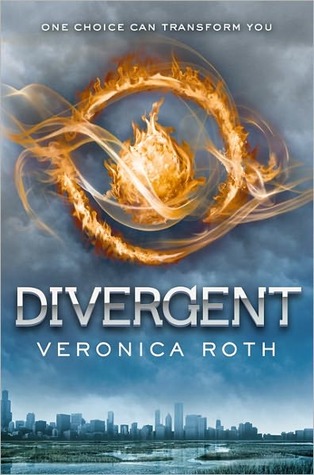
Book Review: Divergent

by Veronica Roth

In Beatrice Prior's dystopian Chicago, society is divided into five factions, each dedicated to the cultivation of a particular virtue—Candor (the honest), Abnegation (the selfless), Dauntless (the brave), Amity (the peaceful), and Erudite (the intelligent). On an appointed day of every year, all sixteen-year-olds must select the faction to which they will devote the rest of their lives. For Beatrice, the decision is between staying with her family and being who she really is—she can't have both. So she makes a choice that surprises everyone, including herself.

During the highly competitive initiation that follows, Beatrice renames herself Tris and struggles to determine who her friends really are—and where, exactly, a romance with a sometimes fascinating, sometimes infuriating boy fits into the life she's chosen. But Tris also has a secret, one she's kept hidden from everyone because she's been warned it can mean death. And as she discovers a growing conflict that threatens to unravel her seemingly perfect society, she also learns that her secret might help her save those she loves . . . or it might destroy her. 

Why I read it: I’ll admit it… all the hype did kind of influence me. But there were so many other reasons: it’s dystopia, it’s a futuristic slightly sci-fi story, the author is a Christian…etc… I read the first hundred pages online and LOVED it, so when I won three books from HC, this was an easy choice.

What I liked: What grabbed me immediately was Tris’s voice. I absolutely loved her character from page one all the way up to the end. I loved how she was brave, and still tried to be selfless. How she was noble and yet cruel. How she has so much talent and still admits her faults. She was such a dynamic character, constantly changing, and I loved her no matter what she did.

Of course, the setting/idea of this story really drew me in, too. I’m a huge fan of futuristic societies, so I enjoyed Roth’s version of the future. While a lot of people talk about how it didn’t feel realistic, I personally don’t care. This is a ‘what if’ sort of book, and I loved the idea of the factions, even if it wasn’t realistic. I loved how nothing was black and white. Each faction had their own good guys and villains. Sometimes the lies the villain was spreading were actually true. In short, despite the unrealistic setting, the good vs. evil battle, and Tris’s personal struggle to find where she fit in, felt very real.

What I disliked: A lot of other people have pointed this out, but the plot doesn’t start until about page 350. The first two-thirds of the book are still fascinating and I was hooked, but they don’t really have much to do with the ending plot. I didn’t mind this plotlessness, since it still worked for me, but I know it’s annoyed other people.

Also, the romance felt a little off. I absolutely loved how it began; this certainly wasn’t love at first sight, and if I hadn’t known who she was going to fall for I wouldn’t have guessed. However, after that first kiss it seems like they’re constantly kissing. The first kiss was super sweet and I absolutely loved it, but all the kissing after that just seemed like overkill.

From a Christian Perspective: One reason why I was looking forward to this book is because I knew the author is a Christian, so hopefully her book would be pretty clean. I wasn’t disappointed. I think I found one swear word, and that was it. As for sexual content, there was a fair bit of kissing like I said earlier, but it never goes beyond that. In fact, one of Tris’s fears is that her boyfriend will try to have sex with her. While it’s fairly clean, there is a good deal of violence. It’s not described as much as it could have been, but some images are kind of disturbing. Not for children under 13, for sure.

To buy or not to buy: I won this through inkpop, like I said, but had I borrowed it from the library I would most certainly have bought it. I think it’s my favourite read so far this year. 


Monday, May 23, 2011

Believability In Dystopias

Lately, a lot of dystopian fiction has been flooding into the market. I think this is a good thing; I’ve never liked Paranormal Romance, and I’ve always loved Dystopia (even years ago, before it became popular.) The dystopian genre is different from paranormal in that it is supposed to be realistic. Most dystopians are set in a futuristic world, often after a sort of apocalypse, that’s either defined by chaos or by a strict totalitarian government. Scientific advances often play a role, but most of the time this is just ‘fake science’ and has no real science behind it.
 
In short, dystopia is a sort of ‘What if?’ genre. What if love was considered to be a disease? (Delirium) What if kids had to fight to the death in an arena? (The Hunger Games) What if everything was decided by a Society, including the person you were supposed to marry? (Matched) What if a virus makes females die at twenty and males at twenty-five? (Wither) What if only teenagers could get pregnant? (Bumped) What if your entire life was defined by what faction you decided to join? (Divergent) Those are just several examples of the ‘What if?’ questions raised by recent dystopian releases.
 
Like any genre, dystopia gets its share of bad reviews. I’ve read negative reviews for all of these books, and most of them seemed to center not around the writing or characters, but on the believability of the story. Lots of people didn’t like Wither because it doesn’t make sense that a virus would kill all girls at exactly twenty years old. People thought The Hunger Games was unrealistic because there’s no way a society would enjoy watching children fight to the death. One of my biggest issues with Matched was that I never understood why the Society needed to control every aspect of life.
 
My question for you is… does it matter? Can you still enjoy Divergent even if you think there’s no way a society could ever evolve into five factions? Would you still buy Delirium even if the idea of ‘curing’ love by frying part of your brain seems just a little far-fetched?

For me, it all depends. I haven’t read Bumped or Wither but I don’t think I’ll mind either of them since they’re obviously ‘What if?’ books. The science behind them may be absolute baloney, but I like the idea. I think creating a world where the teens need to get pregnant is a cool (if somewhat sketchy) setting. In The Hunger Games I think the idea of the tributes having to fight the death is cool enough to make up for the minor lack of believability. However, I just finished Matched and I was annoyed because I never understood why the Society needed to control everything and why they were so lenient with some things but so strict on others.

What’s your take on believability in dystopias? Does it bug you whenever a book’s premise is a little unrealistic? Or do you think that a cool idea is even better if it couldn’t happen in real life? I’d love to hear your thoughts on this popular genre.


Monday, May 16, 2011

Dark Inside


Since I received pretty much nothing In My Mailbox this week, I'm going to skip the post and concentrate on something else I found... two contests.

One is a chance to win an ARC of DARK INSIDE by Jeyn Roberts. As you may remember, I interviewed Jeyn about a month ago. Her book, a futuristic, apocalyptic, dystopia, sounds just like the sort of thing I love to read, so I jumped at the chance to win an ARC. Since I'm counting on at least a couple of you liking the genre as much as I do, I thought you might like to enter this contest.

What are you waiting for? Read the interview with Jeyn, and enter the contest!

The other is POSSESSION by Elana Johnson. I haven't yet had a chance to learn much about POSSESSION, but it's another dystopia, and the cover is gorgeous, so I'm excited for the June 7th release date.

Another reason that makes me so excited for this book, is that Elana wrote an entire book on querying, called From the Query to the Call, which can be downloaded for FREE! It's such a helpful resource, and I would recommend that every writer take a good look at it.

So, hurry on off to the contest!

Friday, May 6, 2011

New WIP: The Web

The other day I learned that I won't be starting work until the end of May (I work in a restaurant, so it doesn't get busy until the tourist season starts) so I decided that May was going to become MyNoWriMo. Last fall I really enjoyed doing NaNoWriMo, and I managed to finish WANDER in just 19 days. This year I'm not expecting to be able to write that fast, since my Shakespeare summer course starts next week, but I still believe I can reach the goal of 50k. I've got 5115 words so far, over three days.

Anyways, the novel I'm working on is a YA dystopian Sci-fi thriller (yeah, I know, way too many tags, right?). Here's the pitch I created:


With the New American Union at war with the European Alliance, it takes sixteen-year-old Cognate protégé, Astrid, to pre-fight all the battles in her mind.

As the youngest Cognate—the intelligent elite— on the Island, Astrid is the only one with the perfect brain to run the complex mental simulation known as The Web. Astrid is the ultimate weapon; in The Web, she can fight upcoming battles over and over to come up with the perfect strategy, allowing the NAU to win every time. It seems like the European Alliance is helpless against this superior technology, until Astrid meets a strange boy inside The Web.

The next morning, the NAU loses their first battle. An hour later, Astrid’s older brother fails the Cognate test and is banished from the Island. That evening, Astrid receives a new brother, Caiden—the mysterious boy from The Web. Astrid hopes that Caiden will explain what’s happening, but there’s one problem. He doesn’t remember a thing. Now Astrid is stuck fighting a losing battle and slowly falling in love with the boy who is legally her brother.

Astrid is convinced that Caiden is innocent, but there’s no denying that the NAU is losing the war. The only way to end the war is to kill the boy she loves, or destroy The Web forever. 


Does this sound like something you'd read? If you're on inkpop, I'd be happy to add you to the notification list. For samples, check out The Prologue or Sample Chapter. This cover is just one I created really quickly; I'll have a better one made by the time I'm done. 

Wednesday, May 4, 2011

Classic of the Week: 1984

For my second Classic post I decided to write on a book I just recently finished. I had been planning to read this book forever, and then once I started reading it took me forever (almost a month) and I just finished now. The book is:

1948 –by George Orwell


Years ago I read Animal Farm and hated it because I was too young to understand the political satire and I still wanted happy endings. Going into 1984 I knew it wasn’t going to be a happy book, and especially with the big dystopia trend on now I’m more used to books on totalitarian societies. In that way, 1984 didn’t disappoint.

Set in a futuristic world where Oceania (America and England) is at war with either Eurasia or Eastasia and history is being constantly written, it follows the life of an ordinary worker named Winston who hates The Party yet has little interest in actually leading a rebellion or doing anything major against the party. For him, rebellion means having an affair with one of his beautiful young co-workers.

I was surprised by the level of sexual content in this book. Prostitution is mentioned and Winston writes in his diary about a time when he visits a prostitute. Winston and Julia do have sex many times, and it’s described the first time or two. Before they get together, Winston fantasizes about Julia’s body and when they do finally have sex it’s more of an act of rebellion than of love: he tells her that the more men she has slept with before, the more he loves her. And yet, he constantly says he loves her and he would rather do all sorts of horrible things rather than leave her. So, on the whole, the romance aspect was a little confusing to me and extremely chilling at the end.

The plot was slower than I expected. For the first third of the book very little happens. The set-up is really interesting, but there’s no real action until part two, where Winston and Julia finally get together. When that finally gets boring something really dramatic happens, and the rest of the book basically turns into a physiological treatise. In short, this is not something you read if you want a gripping story and compelling characters. I didn’t like the characters. This wasn’t because they were poorly written characters. They were perfectly written, showing how helpless and dark humans can be.

1984 is filled with many great insights. It’s scary, perhaps a little exaggerated, but still very true. It’s not a fast read, and certainly not happy. At times it can be slightly confusing and at others it can drag. This is not something you read for entertainment. I wouldn’t recommend it for readers under about 15/16 because it deals with a lot of tough political content. For anyone older, this should be required reading. It makes you see society in a whole new light. 

Monday, April 18, 2011

Author Interview: Jeyn Roberts

Jeyn Roberts, author of Dark Inside was an inkpopper, but she found her publishing contract through a more traditional route and now has a three-book contract with publisher Simon and Schuster. Jeyn is from Vancover BC (yay! Another Canadian!) and she earned a degree in psychology and creative writing at UBC. For a quick synopsis of Dark Inside click here, and then scroll down to read the interview with Jeyn. (and make sure to check out the important links at the end, where you can pre-order Dark Inside so you'll get it right on the November 1st release date)


What was your inspiration for Dark Inside? Dreams. When I was a teenager I started having repetitive dreams about a world in which there was this gigantic evil. I still have them every now and then. And some of the scenes in the book are from actual dreams. 

How has your life changed since getting the publishing deal? In some ways I'm a lot less busy, in other ways I'm more busy! I'm a full-time writer now which is amazing. And I get to work from home which is great! My cats are thrilled to see so much of me. 

Is Dark Inside a stand alone novel? If not, how many more can we expect? Dark Inside is the first of three books. I'm currently working on the second one which will be out seven months after the first. 

I've heard you travel a lot. How have these experiences helped shape Dark Inside? I do travel a lot and it has helped my writing in many ways. Not only do I get to see everything but I'm allowed to learn and understand different cultures. Also, I take the same route every year that Mason takes in his book. I drove through the mountains a few weeks ago and kept thinking "Oh, that's where Mason did that" and "That's where he met Chickadee!" It was quite a funny experience. 

On YAtopia you called Dark Inside somewhat of a horror/dystopia... but not really. In what ways does it fit those genres, and how is it different? I always view dystopia as a something that takes place in the future. eg: Hunger Games, 1984. Dark Inside takes place in the present so that's why I don't like to fully categorize it as dystopia. It's a scary book so that's why I consider it horror. But there's also some romance and lots of drama. I think it really takes on a genre of its own. 

Is there anything you'd like to say to aspiring YA authors? Be patient and never give up. Becoming a writer is a long journey. Enjoy it. Learn to accept and give criticism. Don't be so hard on yourself. Remember, every author starts at the beginning. No one starts out with a blank page and writes a masterpiece.


Important Links


Amazon.ca
Amazon.com
Barnes and Noble
Facebook Fan Page

Wednesday, April 6, 2011

Book Review: Mockingjay

By Suzanne Collins

Young Katniss Everdeen has survived the dreaded Hunger Games not once, but twice, but even now she can find no relief. In fact, the dangers seem to be escalating: President Snow has declared an all-out war on Katniss, her family, her friends, and all the oppressed people of District 12. The thrill-packed final installment of Suzanne Collins' Hunger Games trilogy will keep young hearts pounding.


Why I read it: I’m a huge fan of The Hunger Games series and I was really exciting for the release of Mockingjay. My parents gave me this book for Christmas.

What I liked: Unfortunately, not much. Perhaps if the first books hadn’t been so amazing I would have enjoyed this more, but as it is I just found it a bit of a letdown. There were certain things that I liked, such as Finnick’s characterization and the way the Capitol was manipulating everything. The whole political situation was confusing on purpose, and I liked that.

What I disliked: The plot was not near as good as the first two books. For starters, Katniss was hardly on the front lines. As the mockingjay, she was kept safe for most of the book and all the action happened when she wasn’t around. The stakes also seemed much lower; before the book was half done the rebels knew they were going to win, it was just a matter of who was going to die. On the whole, there didn’t seem to be a concrete purpose to anything that happened.

Katniss by this time is so changed from the girl in the first book that I didn’t like her anymore. All her spunk is done and the smallest thing sends her into a fit. Something has also happened to make Peeta awful. Finnick was the only character that improved but I didn’t like any of the others. There were also a number of characters introduced who seemed to be part of the story just so they could die.

The conclusion was hardly satisfying. I’m not a person who likes happy endings, but Mockingjay’s ending was a little too bitter. The love triangle with Peeta and Gale is finally resolved but it felt a little empty and rushed. On the whole, ‘rushed’ seems to be the word for the ending. Everything happened so quickly, in short snippets separated by long periods of time.

From a Christian Perspective: Like the other books, there is no sexual content or swearing. However, the violence is even worse; people are killed in some of the most gruesome methods I could possibly have imagined.

To buy or not to buy: If you weren’t completely in love with the other two, don’t bother getting Mockingjay. I bought it simply because I wanted to complete my set, but I found it more of a disappointment than anything. 

Tuesday, March 29, 2011

Book Review: Catching Fire

By Suzanne Collins

Against all odds, Katniss Everdeen has won the annual Hunger Games with fellow district tribute Peeta Mellark. But it was a victory won by defiance of the Capitol and their harsh rules. Katniss and Peeta should be happy. After all, they have just won for themselves and their families a life of safety and plenty. But there are rumors of rebellion among the subjects, and Katniss and Peeta, to their horror, are the faces of that rebellion. The Capitol is angry. The Capitol wants revenge.

Why I read it: I had read and loved The Hunger Games and so I was eager to read Catching Fire as soon as it came out. My parents gave it to me for Christmas.

What I liked: I was a little worried about this book. After all, the first one had brought a whole chapter of the story to a close and so Collins would have to come up with something different. I don’t want to give any spoilers, but the plot of Catching Fire ends up being quite close to The Hunger Games without giving us needless repetition and it works just as well.

More characters are introduced in this story and they’re all interesting in their own way. To begin with I found both Joanna and Finnick annoying, but as the story progressed I grew to like them. The old characters were just like before: Peeta is just as amazing, we finally see a bit more of Haymitch’s real personality, Cinna continues to be one of my favourite characters and Prim, even though we don’t see her much, is still so sweet.

What I disliked: Very little. The plot seemed a little repetitive of the first book but the ending completely opens it up in a whole new way and increases the stakes, which makes me a little worried about the third book. Like the first one, this is a very violent story so I wouldn’t give it to anyone under around 13.

From a Christian Perspective: Like the first one, this book is quite clean. There’s no swearing and no real sexual content. This book is a little edgier however; Peeta and Katniss do share a bed (although it seems like it doesn’t go farther than that) and Joanna strips naked at least once.


To buy or not to buy: To anyone who liked the first one, this is certainly a worthy sequel. If you haven’t read The Hunger Games, go read that first and then buy this book.