Showing posts with label Delirium. Show all posts

Friday, August 19, 2011

First-Impression Friday: Delirium


Before scientists found the cure, people thought love was a good thing. They didn’t understand that once love -- the deliria -- blooms in your blood, there is no escaping its hold. Things are different now. Scientists are able to eradicate love, and the governments demands that all citizens receive the cure upon turning eighteen. Lena Holoway has always looked forward to the day when she’ll be cured. A life without love is a life without pain: safe, measured, predictable, and happy.

But with ninety-five days left until her treatment, Lena does the unthinkable: She falls in love.

Title: I like the title Delirium. From the little I know about the story, apparently love is referred to as the delirium, so it fits nicely as well as being intriguing.

Cover: I know a lot of people really like this cover, but I can’t stand it. The idea of having the picture underneath is interesting, but it just ends up looking a little strange. I don’t like the picture of the girl by itself, and it’s really hard to see her through the letters. This was an interesting idea for a cover, but I don’t think it worked that well.

Pitch: This pitch is a little heavy on world building, but it really showcases the conflict of the book. Everyone thinks love is a disease which has to be cured. The MC agrees with them, until she falls in love herself. This is a great concept, and even though I don’t like romance, I can’t wait to read it.

First Sentence: It has been sixty-four years since the President and the Consortium identified love as a disease, and forty-three since the scientists perfected a cure.
Like the pitch, this is chilling and intriguing. There’s the idea of love as a disease, and then the idea that scientists can somehow cure love. While this sentence is completely telling and doesn’t jump into the action, it’s still attention grabbing.

First Chapter: Like the first sentence, this chapter is almost exclusively telling. This annoyed me a bit, since it’s much better to get right to the action, but I must say it was all good backstory. I love how the MC has completely bought into the lies of her society. It’s always much more interesting when the MC believes that something is right, and then has to have her mind changed. That way the story centers around her inner struggle, rather than around a war.

Overall: Aside from the fact that I hate the cover, I’m really looking forward to this book. While it’ll probably be a romance, the dystopia aspect of it really intrigues me, and so far the writing is excellent. I can’t wait to start reading. 


Monday, May 23, 2011

Believability In Dystopias

Lately, a lot of dystopian fiction has been flooding into the market. I think this is a good thing; I’ve never liked Paranormal Romance, and I’ve always loved Dystopia (even years ago, before it became popular.) The dystopian genre is different from paranormal in that it is supposed to be realistic. Most dystopians are set in a futuristic world, often after a sort of apocalypse, that’s either defined by chaos or by a strict totalitarian government. Scientific advances often play a role, but most of the time this is just ‘fake science’ and has no real science behind it.
 
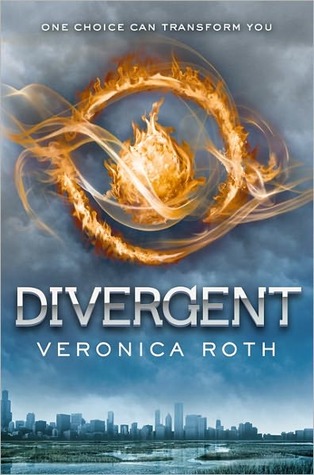
In short, dystopia is a sort of ‘What if?’ genre. What if love was considered to be a disease? (Delirium) What if kids had to fight to the death in an arena? (The Hunger Games) What if everything was decided by a Society, including the person you were supposed to marry? (Matched) What if a virus makes females die at twenty and males at twenty-five? (Wither) What if only teenagers could get pregnant? (Bumped) What if your entire life was defined by what faction you decided to join? (Divergent) Those are just several examples of the ‘What if?’ questions raised by recent dystopian releases.
 
Like any genre, dystopia gets its share of bad reviews. I’ve read negative reviews for all of these books, and most of them seemed to center not around the writing or characters, but on the believability of the story. Lots of people didn’t like Wither because it doesn’t make sense that a virus would kill all girls at exactly twenty years old. People thought The Hunger Games was unrealistic because there’s no way a society would enjoy watching children fight to the death. One of my biggest issues with Matched was that I never understood why the Society needed to control every aspect of life.
 
My question for you is… does it matter? Can you still enjoy Divergent even if you think there’s no way a society could ever evolve into five factions? Would you still buy Delirium even if the idea of ‘curing’ love by frying part of your brain seems just a little far-fetched?

For me, it all depends. I haven’t read Bumped or Wither but I don’t think I’ll mind either of them since they’re obviously ‘What if?’ books. The science behind them may be absolute baloney, but I like the idea. I think creating a world where the teens need to get pregnant is a cool (if somewhat sketchy) setting. In The Hunger Games I think the idea of the tributes having to fight the death is cool enough to make up for the minor lack of believability. However, I just finished Matched and I was annoyed because I never understood why the Society needed to control everything and why they were so lenient with some things but so strict on others.

What’s your take on believability in dystopias? Does it bug you whenever a book’s premise is a little unrealistic? Or do you think that a cool idea is even better if it couldn’t happen in real life? I’d love to hear your thoughts on this popular genre.


IMM

This week's IMM features a number of books I've been absolutely dying to read for a long time. Many thanks to HarperCollins for running weekly writing challenges over on inkpop.com, and thanks to Tara Hudson, author of Hereafter, for choosing my except from The Web as one of the winning entries. Thanks to that, I got to choose three books from HarperTeen. Time for a bunch of dystopias:

Delirium! I'm not a huge fan of romance, but I've heard so many good things about this book that I just had to give it a try. Plus, I love a good dystopia.

DIVERGENT! I've you've been reading my blog you'll know how much I wanted this book. As soon as it arrived in the mail I sat down and read it in just over a day. I'll probably post my full review on Thursday, but let's just say I really loved it. 

This is a book I hadn't really considered getting; I was planning on ordering Bumped by Megan McKafferty instead. Then I read some not-so-good reviews for that book and some amazing reviews for this, so I decided to give it a try. Who doesn't like fairy tale re-tellings? 

I didn't get this one in the inkpop contest; it's Random House, not HarperTeen. I picked it up from the library because I heard a lot about it and (you guessed it) it's a dystopia. I'm nearly done it now and it's good, but not quite what I had hoped.


That's it for my mailbox this week. Have you read any of these books, or are they on your to-read list? What did you get in your mailbox this week?